
Have Any Questions?
Have Any Questions?

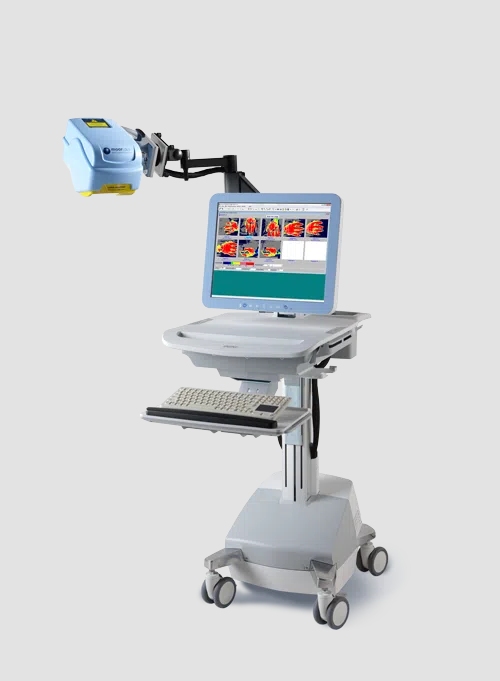
Sensitivity to pin-prick can be used to aid diagnosis but it is subjective and “One prick is valueless: about ten to the square inch are required, not only because the pain spots are localised but because areas of full thickness skin loss may be patchy in the burn” (Jackson, 1953). Use of laser Doppler enables the Burn Care Team to ‘see’ beyond the surface and assess blood flow that is not visible to the eye, and without pain.
‘Mixed depth’, ‘intermediate’, ‘indeterminate’ describe burn wounds that are difficult to assess accurately by even the most experienced burn surgeons. This is as true today as it was when Jackson (1953) acknowledged: “Initial white coagulation of the skin does not necessarily imply full-thickness skin loss, and this warning applies much more to the extended area of white necrosis on the surface of the burn after the zone of stasis has turned white. Those who excise the white areas of a burn at seven to ten days after burning, taking colour as their guide of complete skin destruction, will frequently excise skin that would heal naturally in two to three weeks with no scar”.
Sensitivity to pin-prick can be used to aid diagnosis but it is subjective and “One prick is valueless: about ten to the square inch are required, not only because the pain spots are localised but because areas of full thickness skin loss may be patchy in the burn” (Jackson, 1953). Use of laser Doppler enables the Burn Care Team to ‘see’ beyond the surface and assess blood flow that is not visible to the eye, and without pain.
| Parameter | Specification |
|---|